Svensk version
The climate crisis as a democracy problem
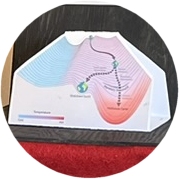
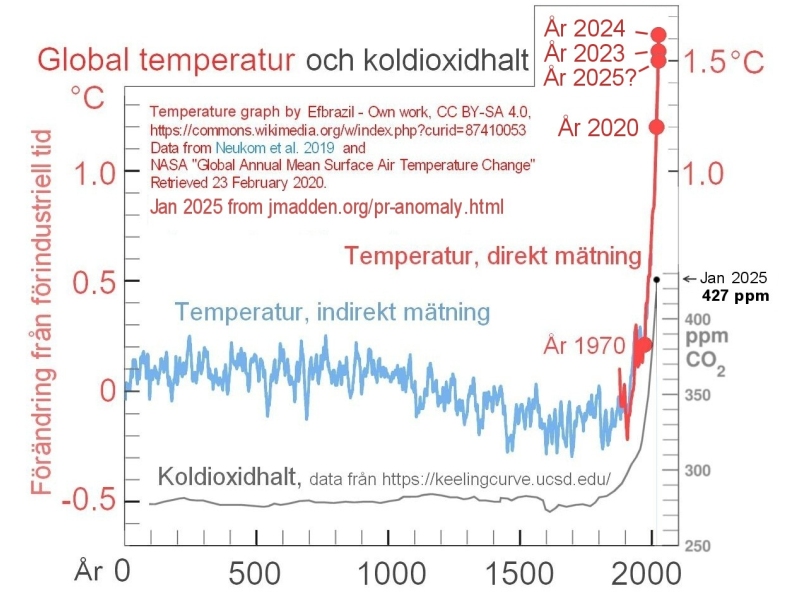
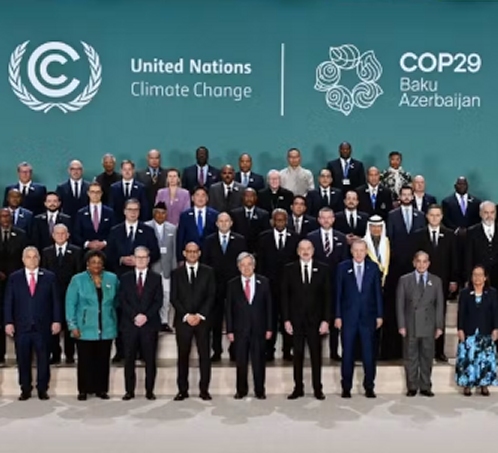
Image source: PeopleForFuture-Umeå and natursidan.se/nyheter/cop29-ett-svek-spar-av-olja-och-naturen-lamnades-utanfor/ Photo: President.az, CC BY 4.0
The climate crisis is ongoing, the carbon dioxide content in the atmosphere has continued to increase despite annual climate negotiations in the form of COP meetings at the UN level since the 1990s.
The damaging effects are most clear and direct in the form of heat, heat waves and droughts that affects animals, people and vegetation to an increasing extent. Weather and wind are also changing through global warming so that the changes between persistent cold and warm periods become more extreme and unpredictable, which increases the risk of damaged crops and threatens global food production. Increased risk of forest fires, storms, torrential rain and hail also accompany climate change, as do system-changing threats from collapsing ocean currents, melting glaciers, thawing permafrost and rising sea levels.
This is a
democracy problem because greenhouse gas emissions are a consequence of the
undemocratic global power system that underlies the fossil energy system. Giant oil companies have been present in the negotiations throughout the years of COP meetings and have put a stop to all decisions that could reduce emissions.
The power system with large companies in networks with each other and with economic influence over governments and the mass media poses an enormous problem of democracy.
Humanity is affected by the climate crisis but lacks a system for power-analyzing general education and democratic influence that could put an end to the exploitation of oil companies.
Different forms of citizen councils could be developed to become part of the solution. At the local level for general education and popular democratic influence, at the national level as well, as well as at a higher EU/UN level to achieve global coordination, dissemination and anchoring.
Show/hide More about the Climate Crisis as a Democracy Problem
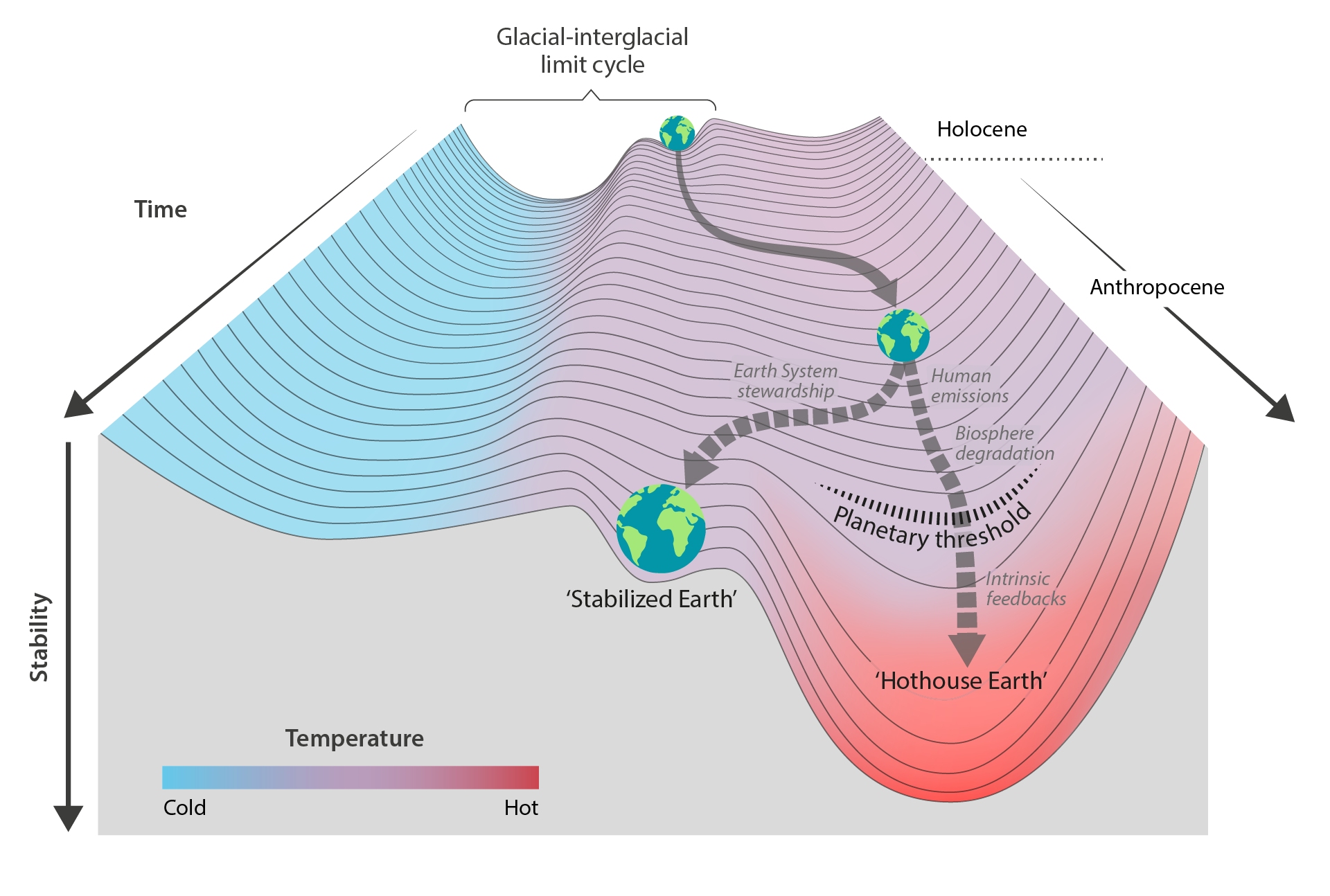
Image source: pik-potsdam.de
A dilemma with the climate crisis is that
the damaging effects come gradually and slowly creeping in except sometimes in the case of sudden extreme weather events that cause major but locally limited damage. If there is a long gap between incidents, we tend to forget how serious they were, we may repair and build a little better, but at the local level, individuals and municipal boards often do not have the energy and ambition to try to fundamentally influence the emissions systems. At the same time, the oil industry has continued to be among the most profitable industries, and investors and pension funds have let profit requirements take precedence over requirements to save the climate. That is why the crisis continues and the
carbon dioxide content in the atmosphere is getting higher every year. Our schoolchildren are learning about the risks of this in the form of tipping points that, when passed, cause the gradual increase in temperature to have an increasingly self-reinforcing feedback loop in the planet's natural climate system. But climate demonstrations and protests have not been able to influence the representative assemblies strongly enough to achieve global emission reductions. The activists are not listened to to any greater extent.
So the gradual
warming has been allowed to continue. The climate issue becomes an issue among all others when the extreme damage has been forgotten because it was a long time ago or because it is happening far from one's own country.
The Covid19 pandemic took the focus away and then came the wars in Ukraine and the Middle East. Research reports pop up from time to time and remind us of the risk of system collapse in ocean currents, ecosystems and weather systems, but the threshold effects are difficult to see except in the rearview mirror. Books are written and published but have not had a profound influence. Perhaps the summer of 2026 will bring clearer crisis signals, but if not, we risk ending up even further down the slope before we
react at a global system level and try to stop emissions and restore the climate.
Next: Artificial Intelligence and Internet Addiction as a Democracy Problem
Up

 THEME DEMOCRACY CRISIS
 Democratic renovation for a sustainable future
 Ancient Democracy - a protection against violence, concentration of power and corruption
 Citizens' assemblies as a method to revitalize democracy
 Wars, arms race and UN crisis
 Pensions and the financial system
 Knowledge deficit and media power
 Artificial Intelligence and internet addiction
 Summary - democratic renovation